
Self Understanding
Muscle Memory: How an art exhibit intersects with psychology
July 21, 2026
— CHRISTINE SPARACINO
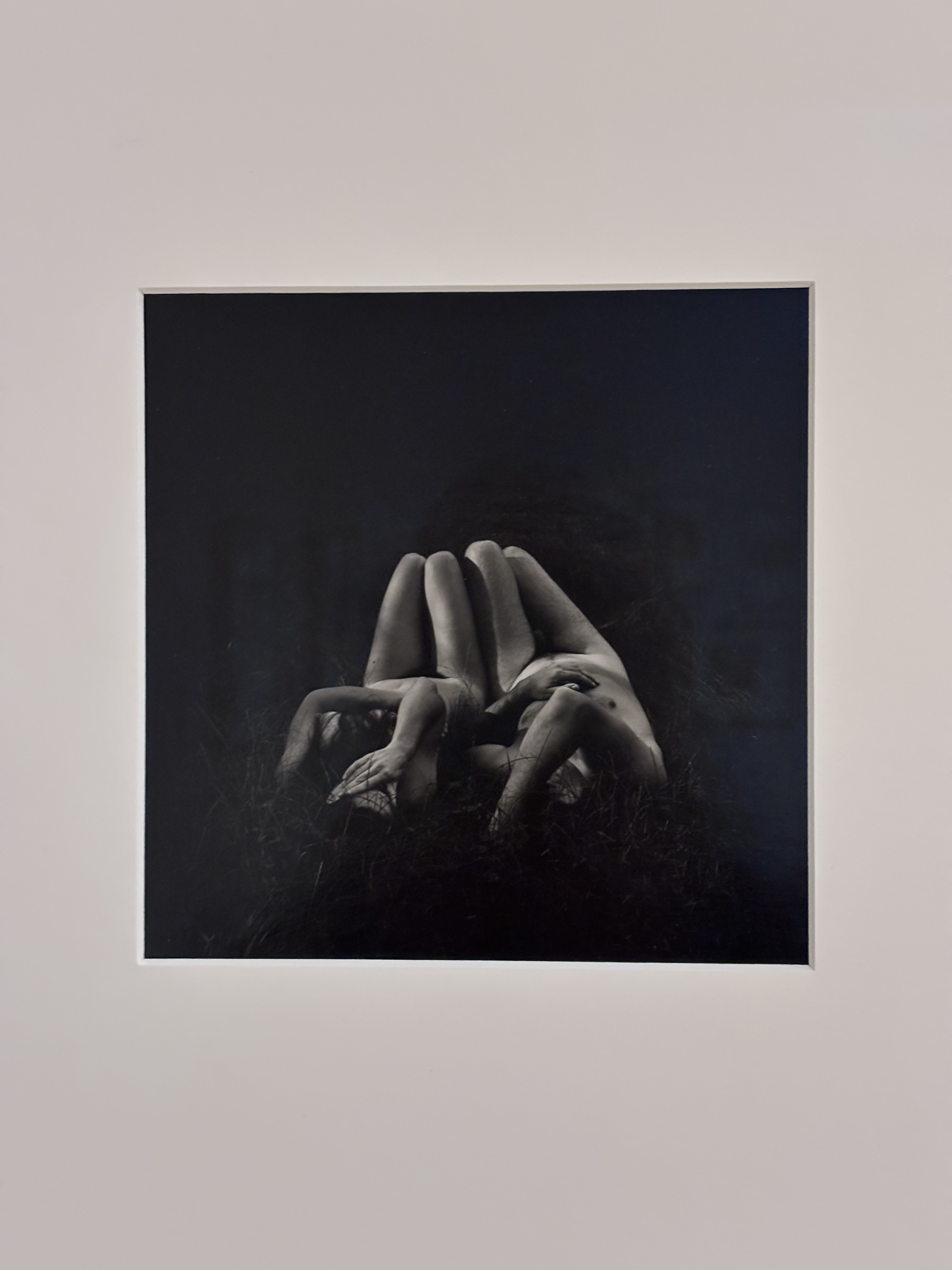
On the heels of last week’s essay about the top-down and bottom-up approach, I scored free tickets to the Phoenix Art Museum (thank you Culture Pass!) and wandered through the exhibit Muscle Memory: Lens on the body.
The timing couldn’t have been more perfect and I debated whether to include reflections from the exhibit in last week’s share. I chose not to because the essay already felt quite long and I didn’t want to ramble on.
The photography exhibit covered several themes, exploring aging, relationships, memory, and identity. I can’t wait to tell you about it!

I have always liked photos and cameras (a vintage camera sits on a dresser in the bedroom). My grandmother gifted me my first camera when I was seven years old and I took to posing my cat and snapping her photo. My younger brother was another involuntary subject and I enjoyed capturing the silliest moments with him.
Looking through photos, analyzing their intricacies, and immersing myself in the moment of capture, I remember my past self. Photos have been the souvenirs of my past lives.
I listened to the Wiser Than Me podcast and interview with Annie Leibovitz. It ended up being another moment of synchronicity 🪄 a podcast episode about how we are seen through photos and then stumbling on to a photography exhibit in a span of a few days.
Leibovitz said “How we are seen changes how we see ourselves.” There are many levels to this comment for us to consider. First, it makes me think of how my mother does not like having her picture taken (unless she can control the elements and give her permission), and how most of us cringe when we see a photo of ourselves that doesn’t reflect how we think we look or how we feel in our bodies.
Photos can be unkind. How many times have we seen a photo of ourselves only to ask for it to be deleted because we don’t like the image reflected back to us? Maybe it was the lighting or the composition, but what we see in the photo doesn’t feel like us. Is it our body that’s the problem or the photo? For so many of us, we assume it’s our body, our looks, that is the problem.
The images reflected in a photograph remind us that there is power in being seen on our terms. We want to have a say in how we are seen and for pictures to accurately capture our image.
When we see the imperfections of our bodies, how do we respond?
Another layer of Leibovitz’s comment is how we are reflected back in relationship. How people see us. What they reflect to us about our nature. How we come to know ourselves by the way we are seen. I grew up being told “You’re so sensitive” and this relational mirror reflected that there was something wrong with me.
Do we have accurate relational mirrors? People who see us clearly, love us, support us? Or are we seen in a skewed or distorted manner? Are the things people tell us about ourselves, the way they characterize us, aligned with how we experience ourselves?
We need accurate mirrors. Any woman who has tried on a bathing suit in a department store dressing room knows the importance of this.
In therapy, in the relationship between therapist and client, we also need an accurate mirror. As we talk about our experiences in therapy, the hope is that the therapist is accurately reflecting back our experiences, thoughts, and feelings, and that type of mirroring can be deeply healing in and of itself. Plus, once we can see our reflection accurately, the insight can be turned into change.
From self-portraits I stumbled into a room designated for aging and the body with photos that capture lines and wrinkles. How what we see on the body is the life we have lived, the tangible evidence, and every scar tells a story, every grey strand a marker of the years we have lived. We can’t live without a body and yet we carry beauty standards, traumas, memories, and more in our bodies.
As I age, I bump into how uncomfortable it feels to see my body change. The new lines on my face. The spots that appear on my skin. The aging as it appears all over my body. And yet, this art exhibit encourages us to view aging and the years of evidence apparent on our bodies with love and respect. Our bodies have carried us through life and we have lived our experiences through our bodies. Physical aging is the sign of a life lived.
Can we view the aging with love?
I associate the lines on my face with decline and death, with being closer to the end. I have just gotten to the good part of life and I want to hold on to it. Aging brings us closer to our own fragility and also our aliveness. Aging well means holding on to both.
Aging can make us confront our mortality and all that it means.
One of my specialties as a psychologist is chronic illness, helping clients adjust and live well with health problems. Together in sessions, we process the physical and emotional changes we experience when illness finds us, when our previous health and wellness seem to be distant memories, when we can’t get back to what it used to be like. Therapy provides a space for us to process the losses associated with illness.
Our bodies empower us. We can climb tall mountains, swim in oceans, do extreme sports. We can push our bodies, and they will sustain us, even grow stronger. But our bodies also limit us: what we can’t attain because of our bodies; how illness limits us; what remains out of reach despite our best efforts.
A psychologist once said, “There is no vacation from diabetes (or chronic illness). There is no vacation time, no days off. You can’t call in sick.” We can’t decide to skip giving ourselves insulin and take a few days off when we are burned out. We are bound to this body and its limitations.
What is the relationship we have with our bodies?
When I was in my 20s and struggling with health problems of my own, I read two of Jon Kabat Zinn’s books - Wherever You Go There You Are and Full Catastrophe Living. His words provided a landing place, an acceptance of the things I couldn’t change about my body, a way to find a home in my body despite the discomfort I experience. My body is powerful and it is limited.
The photography exhibit illuminated the moments of comfort and discomfort that we experience in our bodies throughout life. Like a friend we take a long journey with, there are ups and downs, negotiations and compromises, along the way.
The question that comes to mind: How do we live well with limitation? How do we not let the limitations define us? How do we hold the empowerment and limitations at the same time?
I don’t have all the answers, just questions and observations. Thanks for going on this exhibit journey with me!

